Why Protein Matters During Weight Loss
Weight loss can involve loss of both fat and lean tissue. Learn why protein matters during weight loss, how it supports muscle and nutrition, why GLP-1 users may need to pay special attention, and why resistance training matters too.
Table of Contents
- Protein Does More Than Build Muscle
- Weight Loss Is Not Always Pure Fat Loss
- Why Protein Matters During Calorie Restriction
- Protein and Strength Training Work Together
- Why GLP-1 Treatment Can Make Protein Intake More Challenging
- Smaller Appetite Makes Food Quality More Important
- How Much Protein Does Someone Need?
- Which Body Weight Should Be Used?
- More Protein Is Not Automatically Better
- Protein Needs Can Change With Age
- Does Protein Help You Feel Full?
- What Are Good Protein Sources?
- Plant-based sources
- Dairy foods
- Eggs
- Seafood
- Poultry and other lean animal proteins
- Can Plant-Based Diets Provide Enough Protein?
- What If Large Portions Feel Impossible?
- Protein Does Not Have to Mean Huge Meals
- What About Protein Shakes?
- Protein Quality Matters Too
- Protein Cannot Replace Fruits, Vegetables, and Fiber
- Muscle Mass and Muscle Strength Are Not the Same Thing
- Rapid Weight Loss Deserves Attention
- Protein Alone Will Not Preserve Muscle
- Think Beyond the Scale
- Protein During GLP-1 Treatment: Practical Questions
- Protein and GLP-1 Medications
- Don't Fall for the "All Muscle Loss" Myth
- What Happens If Appetite Becomes Too Low?
- A Simple Way to Think About It
- The Goal Is Not Maximum Protein
- The Bottom Line
- Explore Participating Provider Options
Why Protein Matters During Weight Loss
When people think about losing weight, the number on the scale often gets most of the attention.
But weight is made up of more than body fat.
During weight loss, the body can lose:
- fat mass
- water
- glycogen
- lean tissue
That is why successful weight management should not focus only on making the scale move downward.
Preserving muscle, maintaining strength, and getting adequate nutrition matter too.
Protein plays an important role in that process.
And for people using GLP-1-related medications, paying attention to protein can become especially important because appetite and total food intake may decrease substantially.
Nutrition information reviewed September 2026.
Educational information only. Individual protein needs vary with age, body composition, kidney function, health conditions, activity level, medications, and treatment goals. GoLean Horizon does not provide individualized nutrition or medical advice.
Protein Does More Than Build Muscle
Protein is sometimes discussed as though it matters only to bodybuilders.
It does much more than that.
Dietary protein provides amino acids the body uses to support:
- skeletal muscle
- enzymes
- hormones
- immune-system proteins
- skin and connective tissue
- transport proteins
- tissue maintenance and repair
The body constantly breaks down and rebuilds proteins.
That process continues whether someone is trying to lose weight or not.
During calorie restriction, however, preserving lean tissue becomes particularly important.
Weight Loss Is Not Always Pure Fat Loss
When body weight decreases, the lost weight is rarely 100% body fat.
Some lean mass is usually lost as well.
For example, a body-composition substudy of the SURMOUNT-1 tirzepatide trial found that among participants receiving tirzepatide, approximately:
75% of the weight lost was fat mass
and
25% was lean mass
on average.
That does not mean 25% of every person's weight loss will be muscle.
Lean mass includes more than skeletal muscle.
It includes water and other non-fat tissues as well.
The study does illustrate an important point:
Losing weight and losing fat are not exactly the same thing.
The goal should not simply be to make body weight fall as quickly as possible.
Why Protein Matters During Calorie Restriction
When calorie intake falls, the body still needs amino acids.
Adequate dietary protein can help provide the building blocks needed to maintain lean tissue.
A 2024 systematic review and meta-analysis involving 47 studies and more than 3,000 adults with overweight or obesity found that higher protein intake during weight loss helped reduce declines in muscle mass compared with lower protein intake.
The evidence was stronger for preservation of muscle mass than for improvements in strength or physical function.
That distinction matters.
Eating more protein does not automatically make someone stronger.
Muscle needs a physical reason to remain active and functional.
That is where resistance exercise becomes important.
Protein and Strength Training Work Together
Protein is only part of the muscle-preservation strategy.
Current GLP-1 nutrition guidance emphasizes combining:
adequate protein
with
resistance or strength training.
Resistance exercise gives skeletal muscle a signal that it is still needed.
Protein supplies amino acids that help support maintenance and repair.
Either strategy by itself may be less effective than combining them.
The 2025 joint GLP-1 nutrition advisory specifically cautions that simply increasing protein without structured strength training is unlikely to be enough to optimally support muscle preservation.
This is why the next article in this series will focus specifically on:
Why Strength Training Matters During Weight Loss.
Why GLP-1 Treatment Can Make Protein Intake More Challenging
GLP-1-related medications can substantially reduce appetite and food intake.
Some people notice:
- less hunger
- smaller portions
- earlier fullness
- reduced interest in certain foods
- nausea
- food aversions
- changes in taste or food preferences
These effects can help reduce calorie intake.
But eating substantially less food also means there are fewer opportunities to obtain:
- protein
- vitamins
- minerals
- essential fats
- fiber
- other nutrients
So the question becomes not only:
"Am I eating less?"
but also:
"Am I still getting enough nutrition from what I do eat?"
Smaller Appetite Makes Food Quality More Important
Imagine someone previously ate three large meals each day.
After starting treatment, that person may only tolerate small portions.
If most of that limited food intake comes from foods with little protein or nutritional value, total protein intake may fall considerably.
That is why current expert guidance emphasizes nutrient-dense foods during GLP-1 treatment.
When appetite is limited, each meal has to do more nutritional work.
How Much Protein Does Someone Need?
There is no single protein number that is correct for everyone.
For the general adult population, the traditional Recommended Dietary Allowance is:
0.8 grams of protein per kilogram of body weight per day.
But that number represents a general population reference and is not necessarily the optimal target during active weight reduction.
Current literature has proposed higher intakes during weight loss, often around:
1.2–1.6 grams per kilogram per day
in appropriate individuals.
However, there is an important complication.
Which Body Weight Should Be Used?
For someone with obesity, simply multiplying current body weight by a high protein target can substantially overestimate protein needs.
Experts continue to debate whether protein calculations during weight loss should use:
- actual body weight
- ideal body weight
- adjusted body weight
- target body weight
- fat-free mass
The 2025 GLP-1 nutrition advisory specifically notes that there is not yet consensus on the optimal approach.
That means someone should not see:
"1.6 grams per kilogram"
online and automatically multiply it by their current weight.
A healthcare professional or registered dietitian can help determine an appropriate target based on the individual's circumstances.
More Protein Is Not Automatically Better
Protein recommendations should not become a contest to see who can consume the largest amount.
Very high protein intake may be inappropriate for some people.
Individual needs can be affected by:
- kidney function
- age
- existing medical conditions
- body composition
- activity level
- calorie intake
- pregnancy
- medical treatment
- other nutritional needs
People with chronic kidney disease or other conditions affecting protein recommendations should discuss their intake with their healthcare team rather than adopting a high-protein diet from the internet.
Protein Needs Can Change With Age
Muscle preservation becomes increasingly important with aging.
Older adults may be more vulnerable to:
- declining muscle mass
- reduced strength
- impaired mobility
- sarcopenia
- loss of physical function
Rapid weight reduction combined with very low food intake can make maintaining muscle more challenging.
That makes adequate nutrition and resistance exercise particularly important for older adults undergoing substantial weight loss.
Individualization matters.
Does Protein Help You Feel Full?
Protein may also affect satiety.
Research has generally found that higher-protein meals can increase feelings of fullness compared with lower-protein meals.
But this should not be oversold.
Studies vary, and long-term effects on appetite are less certain than the short-term effects.For someone already experiencing strong appetite suppression from GLP-1 treatment, the goal is not necessarily to make appetite even lower.
The more important reason to prioritize protein may be:
nutritional adequacy and lean-tissue support.
What Are Good Protein Sources?
Protein does not have to come from one type of food.
Sources can include:
Plant-based sources
- beans
- lentils
- peas
- soy foods
- tofu
- tempeh
- edamame
- higher-protein whole grains
- nuts and seeds
Dairy foods
- Greek yogurt
- cottage cheese
- milk
- other protein-rich dairy products
Eggs
Eggs can provide concentrated protein in a relatively small serving.
Seafood
Fish and other seafood provide protein and can also contribute other nutrients.
Poultry and other lean animal proteins
These may also provide substantial protein where they fit an individual's dietary pattern.
There is no requirement that everyone obtain protein from the same foods.
Dietary pattern, preferences, allergies, cultural foods, health conditions, and tolerability all matter.
Can Plant-Based Diets Provide Enough Protein?
Yes.
A well-planned plant-forward or plant-based diet can provide adequate protein.
Useful sources may include:
- soy foods
- beans
- lentils
- peas
- whole grains
- nuts
- seeds
Variety matters because different plant foods provide different amino-acid profiles and other nutrients.
Someone eating very little because of appetite suppression may need more careful planning than someone consuming larger amounts of food.
A registered dietitian can be especially helpful when food choices are restricted by:
- allergies
- intolerances
- gastrointestinal symptoms
- kidney disease
- vegetarian or vegan eating patterns
- other medical requirements
What If Large Portions Feel Impossible?
This is a common practical problem.
Someone may know protein matters but feel full after only a few bites.
The 2025 GLP-1 nutrition advisory suggests that people struggling to meet protein needs may benefit from prioritizing protein-rich foods earlier in the meal.
The logic is simple.
Explore My Options
Compare provider options based on factors such as cost, flexibility, support, medication preferences, and overall experience.
Explore My OptionsGoLean Horizon provides educational information and provider-matching resources. A licensed healthcare provider determines whether treatment is medically appropriate.
If you become full quickly, eating the nutritionally important portion first may make it easier to consume enough before fullness stops the meal.
That does not mean every meal must follow a rigid order.
It is a practical strategy some people may find helpful.
Protein Does Not Have to Mean Huge Meals
When appetite is reduced, smaller portions of nutrient-dense foods may be easier than very large meals.
Examples might include:
- Greek yogurt
- tofu
- eggs
- fish
- cottage cheese
- soy foods
- beans or lentils
- protein-rich soups
- smaller balanced meals
Which foods work best depends on the individual.
Someone experiencing nausea, reflux, constipation, diarrhea, or other gastrointestinal symptoms may need a different approach.
What About Protein Shakes?
Protein supplements can be useful in some situations.
They are not mandatory.
Current expert guidance recognizes that protein shakes, fortified foods, or similar products can sometimes help people meet protein needs when appetite is low or whole-food intake is inadequate.
But a supplement should not automatically replace an otherwise balanced diet.
Products can vary considerably in:
- protein amount
- added sugar
- sodium
- calories
- sweeteners
- vitamins and minerals
- ingredients
- serving size
Someone with kidney disease or another medical condition affecting protein intake should obtain individualized guidance before using high-protein supplements routinely.
Protein Quality Matters Too
Focusing only on grams can miss the bigger nutritional picture.
A person's protein source may also contain:
- fiber
- saturated fat
- sodium
- calcium
- iron
- vitamin B12
- omega-3 fats
- other nutrients
That is why the goal is not simply:
"Hit the protein number at any cost."
The broader objective is a nutritionally adequate dietary pattern.
Protein Cannot Replace Fruits, Vegetables, and Fiber
Another mistake is allowing protein to crowd everything else off the plate.
People still need foods that provide:
- fiber
- vitamins
- minerals
- phytonutrients
- healthy fats
- carbohydrates appropriate to their needs
Protein is important.
It is not the only nutrient that matters.
This becomes especially relevant when appetite is low and total food volume decreases.
Muscle Mass and Muscle Strength Are Not the Same Thing
A person can have measurable lean mass but poor strength or physical function.
Likewise, body-composition measurements do not tell the whole story.
Useful indicators of healthy progress can include:
- strength
- mobility
- endurance
- ability to perform daily activities
- waist circumference
- body composition
- cardiometabolic health
This is one reason scale weight should not be the only measure of success.
Rapid Weight Loss Deserves Attention
Faster is not automatically better.
Very rapid weight reduction combined with poor nutritional intake can increase concern about:
- inadequate protein
- micronutrient deficiencies
- muscle loss
- weakness
- fatigue
- dehydration
Unexpected or excessive weight loss should be discussed with a healthcare professional.
The objective is not simply maximum weight loss.
It is improved health while maintaining adequate nutrition and physical function.
Protein Alone Will Not Preserve Muscle
This point is important enough to repeat.
You cannot reliably compensate for complete inactivity simply by consuming more protein.
Muscle responds to mechanical stimulus.
Current expert guidance therefore pairs protein with:
progressive resistance exercise
where medically appropriate.
Examples may include:
- resistance bands
- body-weight exercises
- weight machines
- free weights
- appropriately structured functional exercises
Exercise should be individualized for health status, fitness, mobility, and medical limitations.
Think Beyond the Scale
Imagine two people each lose 25 pounds.
The scale shows the same result.
But one person may have:
- preserved more muscle
- improved strength
- increased physical activity
- improved nutrition
- better metabolic health
while the other may have:
- lost more lean tissue
- become weaker
- eaten very little protein
- developed inadequate nutrient intake
The scale alone cannot show those differences.
That is why healthy weight management should focus on more than total pounds lost.
Protein During GLP-1 Treatment: Practical Questions
If appetite has fallen substantially, consider discussing questions such as:
For a broader look at what to expect after starting a GLP-1 telehealth program, read What Happens After You Sign Up for a GLP-1 Telehealth Program?.
- Am I eating enough protein overall?
- What protein target is appropriate for me?
- What body-weight reference should be used to calculate it?
- Am I losing weight unusually quickly?
- Am I getting weaker?
- Am I doing resistance exercise appropriate for my health?
- Am I eating enough total nutrients?
- Do my kidney function or other health conditions change my protein needs?
- Would meeting with a registered dietitian help?
- Should my strength or body composition be monitored?
These questions are more useful than automatically copying another person's protein target.
Protein and GLP-1 Medications
Protein intake does not determine which GLP-1 medication someone should use.
Medication selection is a separate clinical decision.
A licensed healthcare professional considers factors such as:
- medical history
- approved indication
- medications
- contraindications
- side effects
- individual response
For a comparison of two commonly discussed GLP-1 medications, read Semaglutide vs Tirzepatide: What's the Difference?.
Read:Who Decides If GLP-1 Treatment Is Appropriate?
Don't Fall for the "All Muscle Loss" Myth
GLP-1 conversations sometimes jump from:
"Some lean mass can be lost during weight reduction"
to:
"These medications destroy muscle."
Those are not equivalent statements.
Weight loss from many methods can include both fat and lean tissue.
The more useful question is:
What can be done to support healthy body composition and physical function during weight loss?
Protein, adequate overall nutrition, resistance exercise, and appropriate clinical monitoring are all relevant.
For more evidence-based myth checking, read:
GLP-1 Myths: What the Evidence Actually Says
What Happens If Appetite Becomes Too Low?
A major reduction in appetite should not automatically be viewed as a sign that treatment is working perfectly.
If someone is consistently unable to eat adequate food or experiences:
- persistent vomiting
- significant weakness
- dizziness
- difficulty staying hydrated
- inability to meet basic nutritional needs
- unexpectedly rapid weight loss
the healthcare team should be contacted.
Medication management and nutrition are connected.
The clinician may need to evaluate what is happening rather than simply encouraging the person to eat less.
A Simple Way to Think About It
During weight loss, ask three different questions:
| Question | Why It Matters |
|---|---|
| Am I losing weight? | Tracks total body-weight change |
| Am I getting adequate nutrition? | Helps support health during calorie reduction |
| Am I preserving strength and function? | Helps assess whether progress goes beyond the scale |
Protein contributes primarily to the second and third questions.
But it works best as part of a larger strategy.
The Goal Is Not Maximum Protein
The goal is:
enough protein for the individual
within:
an overall nutritionally adequate eating pattern
combined with:
appropriate physical activity and resistance exercise
when medically suitable.
More is not automatically better.
Individualization becomes especially important for people who have:
- kidney disease
- advanced age
- significant medical conditions
- restricted diets
- very rapid weight loss
- low muscle mass
- difficulty eating
- significant gastrointestinal symptoms
The Bottom Line
Protein matters during weight loss because losing body weight can involve loss of both fat and lean tissue.
Adequate protein can help support:
muscle and lean tissue
nutritional adequacy
tissue maintenance
and
healthy weight-loss progress
For people using GLP-1-related medications, reduced appetite can make adequate protein and overall nutrition more difficult to achieve.
But protein is not a magic solution.
The strongest approach combines:
adequate nutrition
appropriate protein intake
resistance exercise
physical activity
clinical follow-up
and
attention to strength and function — not just the scale.
The right protein amount varies from person to person.
A healthcare professional or registered dietitian can help determine an appropriate target when individualized guidance is needed.
Explore Participating Provider Options
GoLean Horizon helps you compare participating GLP-1 provider options based on preferences such as cost, flexibility, provider support, medication interest, treatment form, insurance assistance, and simplicity.
Explore My Options
GoLean Horizon provides educational information and provider-matching resources. We do not provide individualized nutrition advice, medical advice, prescribe medication, or determine treatment eligibility. A licensed healthcare professional determines whether treatment is medically appropriate.
Sources & References
- 1.Mozaffarian et al. — Nutritional Priorities to Support GLP-1 Therapy for Obesity: Joint Advisory, 2025. Jointly developed by the American College of Lifestyle Medicine, American Society for Nutrition, Obesity Medicine Association, and The Obesity Society. Covers protein targets, reduced appetite, protein-rich foods, nutrient adequacy, muscle preservation and resistance training. — https://pubmed.ncbi.nlm.nih.gov/40445127/
- 2.Ueshima et al. — Enhanced Protein Intake on Maintaining Muscle Mass, Strength, and Physical Function in Adults With Overweight/Obesity, 2024. Systematic review and meta-analysis of 47 studies supporting the role of higher protein intake in limiting muscle-mass decline during weight loss. — https://pubmed.ncbi.nlm.nih.gov/39002131/
- 3.Look et al. — Body Composition Changes During Weight Reduction With Tirzepatide in SURMOUNT-1, 2025. DXA substudy showing weight loss includes both fat and lean mass, with approximately 75% fat / 25% lean-mass findings. — https://pubmed.ncbi.nlm.nih.gov/39996356/
- 4.Nutritional and Lifestyle Supportive Care Recommendations for Obesity With GLP-1-Based Therapies, 2025. Expert consensus supporting adequate high-quality protein together with individualized exercise and resistance training, while emphasizing that protein alone does not increase or preserve muscle optimally. — https://pmc.ncbi.nlm.nih.gov/articles/PMC12768930/
- 5.Standards of Care in Overweight and Obesity — Pharmacologic Treatment, 2026. Supports assessing nutrition during obesity pharmacotherapy, prioritizing nutrient-dense foods, tailoring protein goals to medical conditions, and combining protein with resistance training to preserve lean mass. — https://pmc.ncbi.nlm.nih.gov/articles/PMC12815056/
Frequently Asked Questions
Why is protein important during weight loss?
Weight loss can involve loss of both fat and lean tissue. Adequate protein provides amino acids needed for tissue maintenance and may help reduce muscle-mass loss during calorie restriction, particularly when paired with resistance exercise.
Do people taking GLP-1 medications need more protein?
GLP-1 medications can reduce appetite and overall food intake, which may make adequate protein intake more difficult. A 2025 joint expert advisory recommends paying particular attention to protein, overall nutritional quality, and resistance exercise during GLP-1 treatment.
How much protein should I eat while losing weight?
There is no universal target. Expert literature frequently discusses ranges around 1.2–1.6 g/kg/day during active weight reduction, but experts disagree about which body-weight measure should be used in people with obesity. Age, kidney function, health status and activity also matter, so individualized guidance may be appropriate.
Does more protein automatically prevent muscle loss?
No. Protein can help, but current guidance emphasizes combining adequate protein with resistance exercise. Protein alone is unlikely to fully protect muscle mass and function.
Can plant-based foods provide enough protein during weight loss?
Yes. Protein can come from foods including beans, lentils, peas, soy foods, whole grains, nuts and seeds. The GLP-1 nutrition advisory includes plant proteins among recommended food sources.
Are protein shakes necessary on a GLP-1 medication?
No. Many people can meet their needs through food. Current expert guidance recognizes that protein shakes or fortified foods may be useful when appetite is low and adequate intake is otherwise difficult.
Should someone with kidney disease increase protein while losing weight?
Not without individualized guidance. Kidney function and other medical conditions can change appropriate protein targets, so generalized high-protein recommendations may not be suitable. Recent obesity standards specifically note that protein goals should be modified for conditions such as chronic kidney disease.
Explore My Options
Compare provider options based on factors such as cost, flexibility, support, medication preferences, and overall experience.
Explore My OptionsGoLean Horizon provides educational information and provider-matching resources. A licensed healthcare provider determines whether treatment is medically appropriate.
Educational information only. GoLean Horizon does not provide medical advice, prescribe medication, or determine treatment eligibility. A licensed healthcare provider determines whether treatment is medically appropriate.
Continue Learning

Semaglutide vs Tirzepatide: What's the Difference?
Semaglutide and tirzepatide are both used in FDA-approved medications for weight management and type 2 diabetes, but they work differently. Learn about GLP-1 vs GIP/GLP-1 activity, indications, weight-loss evidence, side effects, dosing, and other differences.

Who Decides If GLP-1 Treatment Is Appropriate?
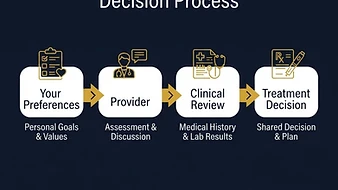
Completing an online form or choosing a GLP-1 provider does not guarantee a prescription. Learn who makes the medical decision, what provider review may involve, and why eligibility, insurance coverage, and provider matching are different things.

GLP-1 Myths: What the Evidence Actually Says
GLP-1 medications are surrounded by claims about diabetes, injections, muscle loss, compounded drugs, weight regain, thyroid cancer, and mental health. Here’s what current evidence actually supports.


What Happens After You Sign Up for a GLP-1 Telehealth Program?
After signing up for a GLP-1 telehealth program, you may complete a health intake, undergo licensed provider review, answer follow-up questions, receive next-step instructions, and learn how prescriptions, pharmacy fulfillment, follow-up, and refills work.