
What Happens After You Sign Up for a GLP-1 Telehealth Program?
After signing up for a GLP-1 telehealth program, you may complete a health intake, undergo licensed provider review, answer follow-up questions, receive next-step instructions, and learn how prescriptions, pharmacy fulfillment, follow-up, and refills work.
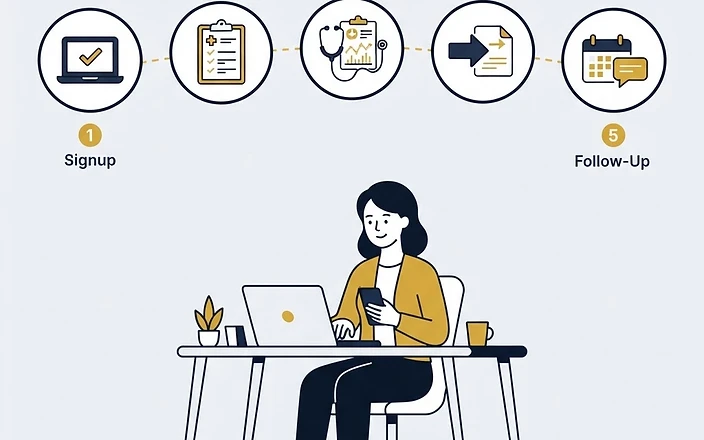
Table of Contents
- Step 1: You May Create an Account and Complete Forms
- Read the Consent and Billing Terms Too
- Step 2: You Complete the Health Intake
- Step 3: A Licensed Provider Reviews Your Information
- Provider Licensure Matters
- Step 4: The Provider May Ask Follow-Up Questions
- Step 5: Testing or Additional Evaluation May Be Requested
- Step 6: The Provider Makes a Treatment Decision
- Step 7: If Medication Is Prescribed, the Prescription Goes to a Pharmacy
- Medication May Not Be Included in the Program Fee
- Step 8: Insurance or Self-Pay May Affect the Next Step
- Step 9: You Should Receive Clear Instructions
- Step 10: Follow-Up Begins
- Step 11: Refills May Require Review
- Step 12: The Treatment Plan May Change
- How Long Does the Process Take?
- A Typical GLP-1 Telehealth Journey
- What Should NOT Happen?
- Questions to Ask Immediately After Signup
- Keep Track of Your Information
- The Bottom Line
Signing up for a GLP-1 telehealth program is usually the beginning of a process — not the end of one.
After enrollment, a provider may ask you to complete health information, review your medications, answer additional questions, attend a telehealth visit, complete testing when clinically appropriate, or take other steps before a treatment decision is made.
The exact process varies by provider and by the individual's circumstances.
Most importantly:
Signing up does not guarantee that a particular medication will be prescribed.
A licensed healthcare provider determines whether prescription treatment is medically appropriate.
Educational information only. GoLean Horizon does not provide medical advice, prescribe medication, or determine treatment eligibility. A licensed healthcare provider determines whether treatment is medically appropriate.
Step 1: You May Create an Account and Complete Forms
After signup, the first step may involve creating an account or patient portal and completing required forms.
Depending on the provider, you may be asked for information such as:
- name and contact details
- identity verification
- current location or state
- health history
- current medications
- allergies
- symptoms or concerns
- pharmacy information
- relevant measurements
- insurance information
- consent forms
HHS telehealth guidance notes that patient intake may include identity verification, symptoms, medical history, and other relevant information, while patients may also be asked to prepare a medication list, health history, pharmacy information, and measurements when appropriate.
The information requested will vary depending on the provider and the type of care being offered.
Read the Consent and Billing Terms Too
Clinical forms are only one part of signup.
You may also encounter:
- telehealth consent
- privacy notices
- subscription terms
- billing authorization
- cancellation policies
- refill terms
Before continuing, make sure you understand both:
the healthcare process
and
the financial agreement
For recurring-program considerations, read:
GLP-1 Subscription Traps: What to Check Before Signing Up
Step 2: You Complete the Health Intake
The health intake gives the clinical team information to review.
Depending on the provider, you may be asked about:
- medical history
- current medications
- allergies
- previous treatments
- health conditions
- symptoms
- treatment goals
- other relevant safety information
HHS advises patients preparing for telehealth to have their current medications and medical history available and to identify questions or concerns they want to discuss.
Be accurate.
Do not leave out medications, conditions, or allergies simply because they seem unrelated.
The licensed provider determines what information is relevant to the clinical decision.
Step 3: A Licensed Provider Reviews Your Information
After the intake is submitted, a licensed healthcare provider may review the information.
The review may occur through:
- a video visit
- a phone visit where permitted
- secure asynchronous review
- secure messaging
- another legally permitted telehealth workflow
Different providers use different models.
HHS recognizes both real-time and asynchronous forms of telehealth.
The important question is not whether every program uses the same format.
It is whether appropriate clinical review occurs.
FDA currently identifies telehealth services that do not require appropriate screening and a prescription from a licensed clinician before providing GLP-1 medication as a warning sign.
Provider Licensure Matters
Telehealth care is generally regulated based in part on where the patient is physically located.
HHS states that health professionals must meet the licensure requirements where they practice and be licensed or otherwise legally permitted to practice in the state where the patient is located.
That is one reason telehealth providers ask for your state.
Provider availability may therefore vary depending on where you live or where you are located during the visit.
Step 4: The Provider May Ask Follow-Up Questions
Submitting the intake does not always mean the provider has enough information to make a decision.
The clinician may ask additional questions about:
- medications
- medical history
- symptoms
- allergies
- previous treatment
- relevant health conditions
- recent testing
- other safety considerations
You may receive those questions through:
- secure messaging
- telephone
- video visit
- patient portal
This is normal.
A request for more information means the clinician is gathering what is needed for appropriate review.
Step 5: Testing or Additional Evaluation May Be Requested
Some patients may need additional evaluation before a treatment decision is made.
Depending on the clinical situation, a provider may recommend:
- laboratory testing
- another telehealth appointment
- in-person evaluation
- medical records
- additional monitoring
- referral to another healthcare professional
HHS notes that after a telehealth appointment, a provider may recommend another appointment, another provider, testing, medication, or other next steps.
Not every person will need the same tests or evaluation.
Testing should be based on the individual's clinical situation, not a one-size-fits-all rule.
Step 6: The Provider Makes a Treatment Decision
After reviewing the available information, the licensed provider determines the appropriate next step.
Possible outcomes may include:
- discussing a treatment option
- prescribing a medication if medically appropriate
- requesting more information
- ordering testing
- recommending another form of care
- determining that a particular treatment is not appropriate
This is why language such as:
"Guaranteed prescription"
or
"Everyone qualifies"
should be treated cautiously.
Clinical appropriateness cannot be determined by marketing copy alone.
For more on evaluating providers before signup, read:
7 Questions to Ask Before Choosing a GLP-1 Provider
Step 7: If Medication Is Prescribed, the Prescription Goes to a Pharmacy
If a licensed provider determines that prescription treatment is appropriate, a prescription may be sent to a pharmacy.
Depending on the program, fulfillment may involve:
- a local retail pharmacy
- mail-order pharmacy
- specialty pharmacy
- another appropriately licensed dispensing pharmacy
Ask:
Which pharmacy will fill my prescription?
FDA recommends verifying that online pharmacies are licensed with a state board of pharmacy, require a prescription, provide a U.S. address and telephone number, and have a licensed pharmacist available to answer questions.
FDA also provides tools to check state pharmacy licenses.
Medication May Not Be Included in the Program Fee
Do not assume:
telehealth signup fee = medication cost
Some programs separate:
- provider-service charges
- membership fees
- medication costs
- shipping
- laboratory costs
Explore My Options
Compare provider options based on factors such as cost, flexibility, support, medication preferences, and overall experience.
Explore My OptionsGoLean Horizon provides educational information and provider-matching resources. A licensed healthcare provider determines whether treatment is medically appropriate.
For the detailed breakdown, read:
What Does a GLP-1 Price Actually Include?
Step 8: Insurance or Self-Pay May Affect the Next Step
If you plan to use insurance, the prescription may involve:
- formulary review
- prior authorization
- pharmacy-network requirements
- deductible
- copayment
- coinsurance
That means a prescription being written does not guarantee that the insurance company will pay for it.
Clinical approval and insurance coverage are separate decisions.
For a full explanation, read:
Does Insurance Cover GLP-1 Medications? What to Check With Your Health Plan
If you are using self-pay, make sure you understand the price, billing schedule, and what is included.
Step 9: You Should Receive Clear Instructions
After the clinical decision, you should understand what happens next.
That may include information about:
- medication instructions
- pharmacy
- follow-up
- testing
- next appointment
- monitoring
- how to ask questions
HHS advises patients to write down important instructions and to reach out when something is unclear.
Some providers make instructions, visit summaries, or other documents available through a patient portal.
If you are unsure what to do after the visit, contact the provider.
Step 10: Follow-Up Begins
GLP-1 telehealth care should not be viewed as simply:
signup → medication arrives → finished
Questions may arise after treatment begins.
Depending on the provider and clinical situation, follow-up may involve:
- secure messaging
- scheduled appointments
- refill review
- laboratory results
- treatment changes
- additional questions
- monitoring
FDA currently identifies having no licensed doctor available to answer questions after medication is received as a telehealth warning sign.
For a deeper comparison of provider support, read:
Provider Support Matters: What Good GLP-1 Follow-Up Should Look Like
Step 11: Refills May Require Review
A subscription does not necessarily mean automatic prescriptions.
Before a refill, the provider may need to determine whether continuing treatment remains appropriate.
Depending on the program, refill workflows may include:
- questionnaires
- secure messages
- provider review
- follow-up visit
- laboratory review
- prescription renewal
Ask before enrolling:
How are refills handled?
How early should I request one?
Does a clinician review each refill?
Does refill support cost extra?
Step 12: The Treatment Plan May Change
Healthcare is not static.
A provider may later determine that:
- the treatment should continue
- a dose should change
- another medication should be considered
- testing is needed
- treatment should be paused
- another type of care is more appropriate
A good telehealth experience should give you a clear way to understand those changes and ask questions.
The goal is not simply to complete the signup process.
It is to understand the ongoing care process.
How Long Does the Process Take?
There is no single answer.
Timing may depend on:
- how quickly you complete the intake
- whether the provider needs more information
- whether a live appointment is required
- provider availability
- whether testing is needed
- insurance authorization
- pharmacy processing
- medication availability
Be cautious about assuming that every program can move from signup to medication shipment on the same timeline.
Speed is only one part of the experience.
Appropriate review matters too.
A Typical GLP-1 Telehealth Journey
A simplified process may look like this:
| Stage | What May Happen |
|---|---|
| 1. Signup | Account creation, consent, billing setup |
| 2. Health intake | Medical history, medications, allergies, goals |
| 3. Provider review | Licensed clinician reviews information |
| 4. Follow-up questions | More information may be requested |
| 5. Additional evaluation | Testing, records, or another visit may be needed |
| 6. Clinical decision | Provider determines appropriate next step |
| 7. Pharmacy | Prescription sent if medically appropriate |
| 8. Payment/coverage | Insurance or self-pay process |
| 9. Instructions | Treatment and follow-up information |
| 10. Follow-up | Questions, monitoring, refills, future review |
The exact workflow varies by provider and patient.
What Should NOT Happen?
Consider asking more questions if a telehealth service:
- guarantees a prescription before clinical review
- provides medication without appropriate screening
- cannot identify who provides the clinical care
- does not explain which pharmacy fills the prescription
- offers no clinician access after medication is received
- does not explain follow-up or refill procedures
- hides recurring billing or cancellation terms
FDA currently identifies several of these as warning signs when consumers obtain GLP-1 medications through telehealth.
Questions to Ask Immediately After Signup
Before you wait for the next step, make sure you know:
- Have I completed all required intake forms?
- Who will review my information?
- Do I need to schedule a visit?
- How will the provider contact me?
- Do I need laboratory testing?
- How will I know the clinical decision?
- Which pharmacy will be used if medication is prescribed?
- Is medication included in my payment?
- How does insurance or self-pay work?
- Who do I contact if I have questions?
If you cannot answer these questions, check your portal or contact the provider.
Keep Track of Your Information
It can help to save:
- signup confirmation
- billing terms
- provider messages
- appointment details
- instructions
- pharmacy information
- test orders
- cancellation terms
Keeping these organized can make future questions easier to resolve.
The Bottom Line
After signing up for a GLP-1 telehealth program, you may go through several steps before and after a treatment decision.
The process may include:
health intake
licensed provider review
follow-up questions
testing or additional evaluation
a clinical decision
pharmacy fulfillment
insurance or self-pay processing
instructions
follow-up
and
refill review
The exact sequence varies by provider and by individual circumstances.
Most importantly:
Signup is not the same as medical approval.
A licensed healthcare provider determines whether prescription treatment is appropriate.
Sources & References
- 1.Telehealth.HHS.gov — Helping Patients Prepare for Their Telehealth Appointment
- 2.Telehealth.HHS.gov — Planning Your Telehealth Workflow
- 3.Telehealth.HHS.gov — What Happens After My Telehealth Visit?
- 4.FDA — FDA's Concerns With Unapproved GLP-1 Drugs Used for Weight Loss
- 5.Telehealth.HHS.gov — Getting Started With Licensure
- 6.FDA — Locate a State-Licensed Online Pharmacy
- 7.FDA — How to Buy Medicines Safely From an Online Pharmacy
Frequently Asked Questions
Does signing up for a GLP-1 telehealth program mean I will receive a prescription?
No. Signup begins the process, but a licensed healthcare provider must review the relevant information and determine whether prescription treatment is medically appropriate.
What information might a GLP-1 telehealth provider ask for after signup?
Depending on the provider and type of care, the intake may include medical history, current medications, allergies, symptoms or concerns, pharmacy information, and other relevant details. HHS telehealth guidance describes these types of information as part of patient preparation and intake. telehealth.hhs.gov
Can a provider ask for laboratory testing before prescribing?
Yes. Depending on the individual clinical situation, a provider may recommend testing, another appointment, additional records, or other evaluation before determining next steps. HHS notes that follow-up after telehealth may include tests, another appointment, medication, or referral. telehealth.hhs.gov
How do I know whether the telehealth provider is licensed to treat me?
HHS states that healthcare professionals must meet applicable licensure requirements and be licensed or legally permitted to practice in the state where the patient is located. telehealth.hhs.gov
How can I verify the pharmacy used by a telehealth provider?
FDA recommends checking the pharmacy's state license and confirms that safer online pharmacies require a prescription, provide a U.S. address and telephone number, and have a licensed pharmacist available. U.S. Food and Drug Administration
What happens after the telehealth appointment?
HHS says patients may receive instructions or recommendations for another appointment, testing, medication, referral, or other next steps, and encourages patients to contact the provider with questions. telehealth.hhs.gov
Should I be able to contact a clinician after receiving medication?
You should understand how clinical questions are handled. FDA currently identifies the absence of a licensed doctor available to answer questions after medication is received as a telehealth warning sign. U.S. Food and Drug Administration
Explore My Options
Compare provider options based on factors such as cost, flexibility, support, medication preferences, and overall experience.
Explore My OptionsGoLean Horizon provides educational information and provider-matching resources. A licensed healthcare provider determines whether treatment is medically appropriate.
Educational information only. GoLean Horizon does not provide medical advice, prescribe medication, or determine treatment eligibility. A licensed healthcare provider determines whether treatment is medically appropriate.
Continue Learning

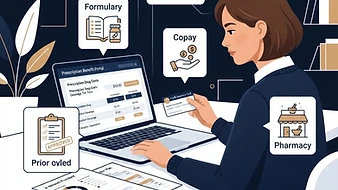
Does Insurance Cover GLP-1 Medications? What to Check With Your Health Plan
GLP-1 insurance coverage varies by medication, health plan, medical indication, and coverage rules. Learn how to check your formulary, prior authorization, deductible, copay, pharmacy network, Medicare GLP-1 Bridge, and appeal options.

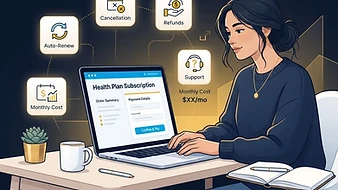
GLP-1 Subscription Traps: What to Check Before Signing Up
Before joining a GLP-1 subscription program, check auto-renewal, cancellation deadlines, refund rules, prepaid commitments, refill timing, medication costs, and other recurring charges.

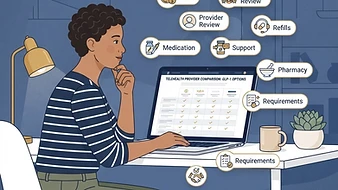
7 Questions to Ask Before Choosing a GLP-1 Provider
Before choosing a GLP-1 telehealth provider, ask what the price includes, who reviews your information, whether medication and follow-up are included, how refills work, and what requirements apply.


Provider Support Matters: What Good GLP-1 Follow-Up Should Look Like
GLP-1 provider support can vary after signup. Learn what to ask about follow-up, clinician access, messaging, refills, test results, treatment changes, and additional fees.