
Month-to-Month vs Prepaid GLP-1 Programs: Which Payment Structure Fits You?
Month-to-month GLP-1 programs may offer more flexibility, while prepaid plans may offer a lower monthly equivalent in exchange for a larger commitment. Learn what to compare before choosing.

Table of Contents
- What Is a Month-to-Month GLP-1 Program?
- What Is a Prepaid GLP-1 Program?
- Annual Pricing Does Not Always Mean Prepaid
- The Main Tradeoff: Flexibility vs Commitment
- Month-to-month
- Prepaid
- Month-to-Month: Potential Advantages
- Smaller upfront financial commitment
- Easier to reassess
- Circumstances can change
- Month-to-Month: Potential Tradeoffs
- Prepaid: Potential Advantages
- Lower monthly equivalent
- Predictable program cost
- Fewer monthly billing decisions
- Prepaid: Potential Tradeoffs
- Cancellation Terms Matter More With Prepayment
- What If the Treatment Plan Changes?
- Medication Cost Can Change the Comparison
- Provider A
- Provider B
- Don't Compare Monthly Billing With Monthly Equivalent
- Program A
- Program B
- Program A
- Program B
- Compare the Same Time Period
- Month-to-month option
- Prepaid option
- The Cheapest Structure Depends on What You Actually Use
- Build a Fair Comparison
- Four Numbers Worth Writing Down
- 1. Amount Due Today
- 2. Ongoing Monthly Charge
- 3. Monthly Equivalent
- 4. Total Commitment
- Insurance Can Change the Picture
- Questions to Ask Before Choosing Month-to-Month
- Questions to Ask Before Choosing Prepaid
- Which Structure Fits Your Priorities?
- You may place greater importance on:
- You may place greater importance on:
- You may prioritize:
- You may prioritize:
- Don't Forget Support
- The Bottom Line
- Month-to-Month
- Prepaid
When comparing GLP-1 telehealth programs, you may find two very different ways to pay.
One program may charge:
month to month
while another may advertise:
a lower monthly equivalent with a multi-month or annual commitment
Neither payment structure is automatically better.
The important question is whether the cost, commitment, flexibility, and included services match what matters to you.
Before choosing, understand exactly how each structure works.
Educational information only. GoLean Horizon does not provide medical advice, prescribe medication, or determine treatment eligibility. A licensed healthcare provider determines whether treatment is medically appropriate.
What Is a Month-to-Month GLP-1 Program?
A month-to-month program generally allows you to pay for services on a recurring monthly basis rather than purchasing a long block of time upfront.
Depending on the provider, that recurring charge might cover:
- provider access
- membership
- follow-up
- refill support
- digital tools
- other program services
Medication may or may not be included.
That distinction matters.
Current telehealth information published through LillyDirect, for example, shows several independent obesity-care providers with monthly pricing while specifically noting that the listed provider rates do not include medication costs.
So always determine whether you are comparing:
a provider-service fee
or
the complete expected program cost
For a detailed breakdown of what a GLP-1 price may include, read:
What Does a GLP-1 Price Actually Include?
What Is a Prepaid GLP-1 Program?
A prepaid program generally involves paying for several months of services in advance.
For example, a provider might offer:
6 months for $1,074
and describe that as:
$179 per month equivalent
The math is straightforward:
$1,074 ÷ 6 = $179 per month
But the billing experience can be very different from paying $179 every month.
If the full amount is required at enrollment, then:
Amount due today = $1,074
not $179.
That distinction is central to understanding prepaid pricing.
Annual Pricing Does Not Always Mean Prepaid
There is another important distinction.
A provider may advertise:
annual pricing
but that does not automatically tell you how the bill is collected.
Depending on the provider, an annual plan could potentially be:
- paid entirely upfront
- billed in installments
- subject to a minimum commitment
- governed by separate cancellation terms
So do not assume that:
annual = prepaid
or that:
monthly equivalent = monthly billing
Ask the provider how the payment is actually collected.
Current telehealth comparison information shows that some providers offer both standard monthly rates and lower annual pricing, illustrating why the exact billing terms should be checked before comparing offers.
The Main Tradeoff: Flexibility vs Commitment
The most obvious difference between the two structures is usually flexibility.
Month-to-month
May offer:
- smaller payments at one time
- less money committed upfront
- easier ability to reassess periodically
- potentially more flexibility if your circumstances change
Prepaid
May offer:
- a lower effective monthly rate
- greater price predictability for the prepaid period
- fewer recurring billing transactions
But may also involve:
- a larger upfront payment
- a longer financial commitment
- more important cancellation and refund terms
Neither set of features automatically makes one structure preferable.
They solve different problems.
Month-to-Month: Potential Advantages
A month-to-month structure may appeal to someone who values flexibility.
Smaller upfront financial commitment
Instead of paying for several months at once, you generally make a recurring payment.
That can make cash flow easier to manage.
Easier to reassess
You may prefer to evaluate the service periodically rather than committing to a longer package immediately.
Circumstances can change
Your provider may change your treatment plan.
Your insurance coverage could change.
You may decide that you want a different provider experience.
Medication availability or pricing could also change.
A shorter financial commitment may give you more room to respond.
Month-to-Month: Potential Tradeoffs
Flexibility can come with its own tradeoffs.
A month-to-month price may have a higher effective monthly rate than a longer-term offer.
You should also ask:
- Does the monthly price stay the same?
- Is there an introductory period?
- Does the program automatically renew each month?
- How do I cancel?
- How much notice is required?
- Are medication costs separate?
- Are follow-up services included?
Month-to-month does not automatically mean there are no terms or commitments.
Read the provider's actual billing and cancellation rules.
Prepaid: Potential Advantages
A prepaid plan may appeal to someone who is comfortable making a longer financial commitment.
Lower monthly equivalent
Providers sometimes reduce the effective monthly rate for longer-term plans.
Current telehealth comparison information provides real examples of providers displaying lower annual pricing than their standard monthly rate.
That can produce meaningful savings on the provider-service component.
Predictable program cost
Paying for a defined period can make the cost of that portion of the program more predictable.
Fewer monthly billing decisions
Some people simply prefer paying for a longer period at once.
Prepaid: Potential Tradeoffs
The lower monthly equivalent should not be evaluated without considering the commitment behind it.
Ask:
How much money is due today?
A plan advertised at:
$179/month equivalent
could potentially require:
$1,074 upfront for six months
if that is the provider's billing structure.
That is a very different cash-flow requirement from $179 billed monthly.
Cancellation Terms Matter More With Prepayment
Before making a multi-month payment, find out:
- Can I cancel early?
- Is any unused portion refundable?
- Are refunds full, partial, or unavailable?
- Is there a cancellation deadline?
- Does the plan automatically renew?
- What happens if I change providers?
- What happens if I no longer use the program?
Do not assume you will receive a prorated refund unless the provider's terms explicitly say so.
The actual contract or program terms control.
What If the Treatment Plan Changes?
This is particularly important in health care.
Paying for a telehealth program does not guarantee that a particular medication will be prescribed or remain appropriate.
A licensed provider determines treatment based on the individual's circumstances.
If the treatment plan changes during a prepaid period, you should understand what happens to the service agreement.
Ask:
Does the prepaid payment cover the telehealth service, medication, or both?
and:
What happens financially if my provider changes the treatment plan?
This is one reason the distinction between provider fees and medication costs is important.
Medication Cost Can Change the Comparison
Suppose two providers advertise:
Provider A
Month-to-month provider membership:
$99/month
Provider B
Annual program:
$69/month equivalent
At first glance, Provider B appears less expensive.
Explore My Options
Compare provider options based on factors such as cost, flexibility, support, medication preferences, and overall experience.
Explore My OptionsGoLean Horizon provides educational information and provider-matching resources. A licensed healthcare provider determines whether treatment is medically appropriate.
But suppose neither price includes medication.
Then the provider-service price is only one part of the comparison.
Your actual cost may be:
Provider service + Medication + Other required charges
For the broader framework, see:
GLP-1 Costs Explained: How to Compare Provider Prices
Don't Compare Monthly Billing With Monthly Equivalent
This deserves special attention because the numbers can look almost identical.
Imagine:
Program A
$199 billed monthly
Program B
$169/month equivalent
The natural reaction may be:
"$169 is cheaper."
But suppose Program B requires six months upfront:
$169 × 6 = $1,014
Now the comparison becomes:
Program A
Amount due now:
$199
Program B
Amount due now:
$1,014
Program B still has the lower effective monthly rate in this illustrative example.
But it requires much more money upfront.
For a complete explanation of this issue, read:
The 3-Price Problem: Intro Price vs Recurring Price vs Prepaid Monthly Equivalent
Compare the Same Time Period
A useful way to compare month-to-month and prepaid programs is to evaluate both over the same period.
Suppose you are comparing six months.
Month-to-month option
$219 × 6 months
Six-month provider-service cost = $1,314
Prepaid option
$179 monthly equivalent × 6 months
Six-month provider-service cost = $1,074
Difference:
$240
In this illustrative example, the prepaid plan costs less over six months.
But that does not automatically make it the preferred option.
You must also consider:
- amount due upfront
- cancellation terms
- refund rules
- services included
- medication costs
- expected use of the program
The Cheapest Structure Depends on What You Actually Use
If you enroll in a six-month program but only use the service for two months and the remaining payment is nonrefundable, the effective cost of those two months becomes very different.
That is why the lowest theoretical monthly equivalent does not always produce the lowest practical cost for every person.
For more on comparing headline price with actual cost, read:
Cheapest Isn't Always Cheapest: How to Compare the Real Cost of a GLP-1 Program
Build a Fair Comparison
Use the same categories for each provider:
| Question | Month-to-Month | Prepaid |
|---|---|---|
| Amount due today | ||
| Effective monthly cost | ||
| Medication included? | ||
| Provider visits included? | ||
| Follow-up included? | ||
| Labs included? | ||
| Shipping included? | ||
| Minimum commitment | ||
| Cancellation allowed? | ||
| Refund available? | ||
| Automatic renewal? | ||
| Estimated 3-month cost | ||
| Estimated 6-month cost | ||
| Estimated 12-month cost |
This helps you compare the entire payment structure instead of one number.
Four Numbers Worth Writing Down
For every program, identify these four numbers:
1. Amount Due Today
What will actually leave your account when you enroll?
2. Ongoing Monthly Charge
What recurring amount will be billed?
3. Monthly Equivalent
If there is a prepaid package, what is its effective monthly cost?
4. Total Commitment
How much are you financially committing to over the full term?
Those four numbers can reveal more than the headline price alone.
Insurance Can Change the Picture
If insurance is involved, the calculation may become different again.
Your costs may depend on:
- whether the medication is covered
- your prescription-drug deductible
- copayments
- coinsurance
- prior authorization
- plan-specific coverage rules
HealthCare.gov recommends comparing estimated total costs rather than focusing on a single cost component, because deductibles, copayments, coinsurance, and other expenses can significantly affect what a person ultimately spends.
The same principle is useful when comparing GLP-1 program structures:
Look at the entire financial picture.
Questions to Ask Before Choosing Month-to-Month
Ask:
- What is charged every month?
- Is medication included?
- Is this an introductory or regular price?
- Does the plan renew automatically?
- How do I cancel?
- Are follow-up visits included?
- Could the monthly price change?
Questions to Ask Before Choosing Prepaid
Ask:
- What is the total amount due upfront?
- How many months does that cover?
- Is the displayed number a monthly equivalent?
- Is medication included?
- Can I cancel before the term ends?
- Are unused months refundable?
- Does the plan automatically renew?
- What happens if my treatment plan changes?
- What services are guaranteed during the prepaid period?
Which Structure Fits Your Priorities?
Rather than asking which structure is universally better, consider what matters most to you.
You may place greater importance on:
Lower upfront commitment
A month-to-month structure may align more closely with that priority.
You may place greater importance on:
Lower effective monthly cost
A longer-term option may sometimes offer that.
You may prioritize:
Flexibility
Review cancellation requirements and the length of commitment.
You may prioritize:
Predictability
Compare the total price and what is included over the full term.
The payment structure is only one part of the provider experience.
Don't Forget Support
A lower-cost payment structure does not tell you what the care experience will be like.
Compare:
- provider access
- response time
- follow-up
- refill process
- messaging
- insurance support
- what happens when questions arise
Price and service should be evaluated together.
The Bottom Line
Month-to-month and prepaid GLP-1 programs involve different tradeoffs.
Month-to-Month
May offer:
more flexibility
smaller upfront payments
and
less long-term financial commitment
but may have a higher effective monthly rate.
Prepaid
May offer:
a lower monthly equivalent
and
greater cost predictability over the prepaid period
but may require:
more money upfront
and
a longer commitment
Neither structure is automatically the better choice.
Compare:
total cost
amount due today
what is included
cancellation and refund terms
support
and
the length of commitment
before deciding which structure better matches your priorities.
Sources & References
Frequently Asked Questions
What is the difference between month-to-month and prepaid GLP-1 programs?
A month-to-month program generally bills on a recurring monthly basis, while a prepaid program may require payment for several months in advance. The prepaid option may have a lower monthly equivalent but can involve a larger upfront commitment.
Is a lower prepaid monthly equivalent always cheaper?
Not necessarily for every situation. Consider the total prepaid amount, how long you expect to use the program, cancellation and refund terms, and whether medication and other services are included.
Does annual pricing mean I have to pay the full year upfront?
Not necessarily. “Annual pricing” describes the plan term or pricing structure but does not by itself tell you how the provider collects payment. Verify whether the amount is paid upfront, in installments, or another way.
What should I check before prepaying for a GLP-1 program?
Check the amount due upfront, length of commitment, what is included, cancellation rules, refund policy, automatic renewal terms, and what happens if your treatment or provider needs change.
Does the monthly GLP-1 program fee include medication?
Not always. Current LillyDirect telehealth information expressly states that the independent-provider rates shown on its comparison page do not include medication costs.
How should I compare monthly and prepaid plans?
Compare both over the same period—such as three, six, or twelve months—and separately record the amount due today, effective monthly cost, medication cost, included services, and total financial commitment.
Is month-to-month always more flexible?
It may involve a shorter financial commitment, but individual provider cancellation, renewal, and billing terms vary. Check the specific terms rather than assuming that “monthly” automatically means you can cancel immediately without conditions.
Explore My Options
Compare provider options based on factors such as cost, flexibility, support, medication preferences, and overall experience.
Explore My OptionsGoLean Horizon provides educational information and provider-matching resources. A licensed healthcare provider determines whether treatment is medically appropriate.
Educational information only. GoLean Horizon does not provide medical advice, prescribe medication, or determine treatment eligibility. A licensed healthcare provider determines whether treatment is medically appropriate.
Continue Learning

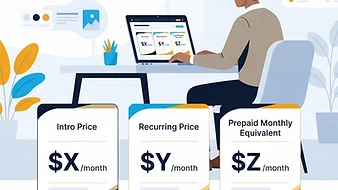
The 3-Price Problem: Intro Price vs Recurring Price vs Prepaid Monthly Equivalent
A GLP-1 program may show an introductory price, an ongoing monthly price, or a prepaid monthly equivalent. Learn how to tell them apart and compare the real financial commitment.
Why a $99 GLP-1 Offer May Not Stay $99
A $99 GLP-1 offer may represent an introductory price, provider membership, or monthly equivalent rather than your complete ongoing cost. Learn what to check before signing up.

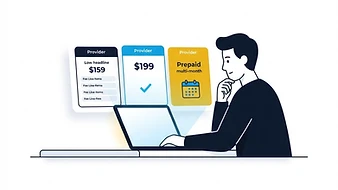
Cheapest Isn’t Always Cheapest: How to Compare the Real Cost of a GLP-1 Program
The lowest advertised GLP-1 price may not be the lowest total cost. Learn how to compare medication, memberships, provider visits, shipping, prepayment, support, and ongoing charges.
What Does a GLP-1 Price Actually Include?
A GLP-1 price may include medication, provider visits, membership, follow-up, shipping, or only part of the program. Learn what to check before comparing providers.