
How Long Does GLP-1 Treatment Last? What to Know About Duration and Stopping
The labeling describes weight-management GLP-1 treatment around long-term maintenance, and the withdrawal trials measured what happened when treatment stopped. Here is what the published sources report, and why decisions about duration belong with your prescriber.
Table of Contents
If you take a GLP-1 medication for weight management, or you are considering one, a reasonable question is how long treatment is expected to last. The useful answer has two parts: what the prescribing information says about how these medications are used, and what the published withdrawal trials measured when treatment stopped.
Short version
-
The FDA-approved labeling for Wegovy and Zepbound describes weight-management treatment as reducing excess body weight and maintaining that reduction long term, and describes reaching and continuing a maintenance dose (Wegovy PI; Zepbound PI).
-
In an extension of the STEP 1 trial, participants regained two-thirds of their prior weight loss, on average, in the year after semaglutide and lifestyle intervention were withdrawn (STEP 1 trial extension).
-
In SURMOUNT-4, participants who continued tirzepatide maintained and added to their earlier weight reduction, while those who switched to placebo regained weight (SURMOUNT-4).
-
These are group averages from specific trials. How long you take a GLP-1 medication, and whether or when to change or stop it, is a decision for you and the clinician who prescribes it.
What the labeling says about long-term use
Wegovy injection is indicated, with a reduced-calorie diet and increased physical activity, to reduce excess body weight and maintain weight reduction long term in adults and pediatric patients aged 12 years and older with obesity, and in adults with overweight who also have at least one weight-related condition; Wegovy tablets are indicated for that purpose in adults (Wegovy PI). Zepbound is indicated for adults on the same basis (Zepbound PI).
Both labels describe titrating up to a maintenance dose and continuing it (Wegovy PI; Zepbound PI). Dose schedules are set by the prescriber and are not covered here.
The labeling is written for prescribers and is updated as data change. It describes how the medication is used; how long that continues for a specific person is a clinical decision.
What studies found when treatment stopped
STEP 1 assigned 1,961 adults without diabetes, with a body mass index of at least 30 or at least 27 with one or more weight-related conditions, to 68 weeks of once-weekly semaglutide or placebo alongside lifestyle intervention. Treatment and lifestyle intervention were then discontinued, and an off-treatment extension followed part of the group for a further year (STEP 1 trial extension).
The extension included 327 participants. Mean weight loss from week 0 to week 68 was 17.3% with semaglutide and 2.0% with placebo. After withdrawal, semaglutide participants regained 11.6 percentage points of lost weight and placebo participants 1.9 percentage points by week 120, leaving net losses of 5.6% and 0.1%. The extension analyses were exploratory (STEP 1 trial extension).
The authors concluded that participants regained two-thirds of their prior weight loss one year after withdrawal, and that the findings "confirm the chronicity of obesity and suggest ongoing treatment is required to maintain improvements in weight and health" (STEP 1 trial extension).
SURMOUNT-4 was a phase 3 randomized withdrawal trial: a 36-week open-label tirzepatide lead-in period, then a 52-week double-blind, placebo-controlled period, in adults with obesity or overweight and without diabetes (SURMOUNT-4). At week 36, 670 participants were randomized either to continue tirzepatide or switch to placebo for 52 weeks (SURMOUNT-4).
From week 36 to week 88, mean weight change was −5.5% with tirzepatide versus a 14.0% increase with placebo, and 89.5% of participants receiving tirzepatide maintained at least 80% of their weight loss from the lead-in period, compared with 16.6% receiving placebo. The authors concluded that withdrawing tirzepatide led to substantial regain of lost weight, whereas continued treatment maintained and augmented the initial weight reduction (SURMOUNT-4).
Both trials report group averages under specific designs and eligibility criteria, and are not a prediction for any one person. Our guide to GLP-1 myths and what the evidence says covers related claims about weight after treatment stops.
Why this is a conversation with your prescriber
The prescribing information for both products is written for healthcare professionals and is updated as data change (Wegovy PI; Zepbound PI).
Wegovy's medication guide asks patients to tell their healthcare provider about problems with their pancreas or kidneys, type 2 diabetes with a history of diabetic retinopathy, or planned surgery or procedures using anesthesia or deep sedation (Wegovy PI).
Because two people with the same prescription can have different histories, priorities, and responses, questions about duration, including whether to continue, change, or stop, are best answered by the clinician who prescribes and follows your treatment. For the steps a telehealth program follows, see what happens after you sign up, and for who to contact and how quickly, see provider support and follow-up.
Questions to ask before you start
These questions are worth asking before treatment begins.
-
How does the prescribing information describe the way this medication is used over time, and what is the maintenance plan for me?
-
What would make you recommend reassessing my treatment?
-
What does follow-up look like, and who answers clinical questions? (Provider Support Matters)
-
If I notice side effects, who do I contact, and how quickly should I expect a response?
-
What is included in the price, and what would we do if cost becomes a problem? (GLP-1 Costs Explained)
What to do if cost or side effects are making you consider stopping
If cost or side effects have you thinking about stopping, the first step is a conversation with the clinician who prescribed the medication. The labeling directs patients to tell their healthcare provider about certain symptoms and conditions (Wegovy PI), and a prescriber can put what you are experiencing in context.
Cost is often the more concrete of the two to work through. Our guide to GLP-1 costs explains how program prices are built up from several components, and comparing what each option actually includes is something you can do before any decision about treatment.
What this article will not do is tell you whether stopping is safe or unsafe for you, suggest a taper, a dose change, or a restart, or advise you to continue. Those decisions belong with the clinician who knows your history.
Bottom line
The approved indications for Wegovy and Zepbound describe reducing excess body weight and maintaining that reduction long term, and both labels describe reaching and continuing a maintenance dose (Wegovy PI; Zepbound PI). The published withdrawal trials found substantial regain of lost weight on average after treatment stopped, and the STEP 1 extension authors concluded that obesity is chronic and that ongoing treatment is required to maintain improvements in weight and health (STEP 1 trial extension; SURMOUNT-4).
How long you take a GLP-1 medication, and whether or when it changes or stops, is a decision to make with the clinician who prescribes it.
Sources & References
- 1.FDA, WEGOVY (semaglutide) injection and tablets, Prescribing Information (revised February 2026): https://www.accessdata.fda.gov/drugsatfda_docs/label/2026/215256s033lbl.pdf (accessed 2026-10-21)
- 2.FDA, ZEPBOUND (tirzepatide) injection, Prescribing Information: https://www.accessdata.fda.gov/drugsatfda_docs/label/2026/217806s042lbl.pdf (accessed 2026-10-21)
- 3.Wilding JPH, et al. Weight regain and cardiometabolic effects after withdrawal of semaglutide: The STEP 1 trial extension. Diabetes Obes Metab. 2022;24(8):1553-1564: https://dom-pubs.onlinelibrary.wiley.com/doi/10.1111/dom.14725 (accessed 2026-10-21)
- 4.Aronne LJ, et al. Continued Treatment With Tirzepatide for Maintenance of Weight Reduction in Adults With Obesity: The SURMOUNT-4 Randomized Clinical Trial. JAMA. 2024;331(1):38-48: https://jamanetwork.com/journals/jama/fullarticle/2812936 (accessed 2026-10-21)
Frequently Asked Questions
Is there a set time limit on how long you can take a GLP-1 medication for weight management?
The labeling reviewed for this guide does not describe a fixed course with an end date. Wegovy and Zepbound are indicated to reduce excess body weight and maintain weight reduction long term, and both labels describe reaching and continuing a maintenance dose. How long treatment continues for an individual is a clinical decision made with the prescriber.
What did the studies find when treatment stopped?
In an extension of the STEP 1 trial, participants regained two-thirds of their prior weight loss on average in the year after semaglutide and lifestyle intervention were withdrawn. In SURMOUNT-4, participants who continued tirzepatide maintained and added to their earlier weight reduction, while those who switched to placebo regained weight. Both are group averages from specific trials, not predictions for an individual.
Who decides whether to continue or stop a GLP-1 medication?
The labeling is written to guide how the medication is used, and it asks patients to tell a healthcare provider about certain symptoms and conditions. Decisions about continuing, changing, or stopping treatment belong with the clinician who prescribes it, who can consider your history and how treatment is going.
Compare Participating GLP-1 Provider Options
Compare provider options based on factors such as cost, flexibility, support, medication preferences, and overall experience.
Explore My OptionsGoLeanHorizon may be paid by providers when you request or start care with them. This doesn't change what you pay. Learn how we make money
Educational information only. GoLeanHorizon does not provide medical advice, prescribe medication, or determine treatment eligibility. A licensed healthcare provider determines whether treatment is medically appropriate.
Continue Learning

GLP-1 Myths: What the Evidence Actually Says
GLP-1 medications are surrounded by claims about diabetes, injections, muscle loss, compounded drugs, weight regain, thyroid cancer, and mental health. Here’s what current evidence actually supports.

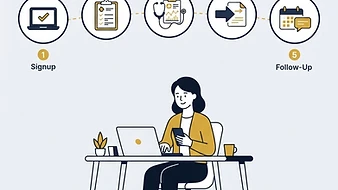
What Happens After You Sign Up for a GLP-1 Telehealth Program?
After signing up for a GLP-1 telehealth program, you may complete a health intake, undergo licensed provider review, answer follow-up questions, receive next-step instructions, and learn how prescriptions, pharmacy fulfillment, follow-up, and refills work.
GLP-1 Costs Explained: How to Compare Provider Prices
GLP-1 pricing can be confusing. Learn how to compare medication costs, provider fees, memberships, labs, shipping, insurance, introductory offers, and ongoing monthly costs before choosing a provider.


Provider Support Matters: What Good GLP-1 Follow-Up Should Look Like
GLP-1 provider support can vary after signup. Learn what to ask about follow-up, clinician access, messaging, refills, test results, treatment changes, and additional fees.