
Can You Get a GLP-1 Prescription Through Telehealth in Your State?
Telehealth can connect you with a licensed clinician, but whether a program can serve you depends on where you live. Here is how to check before you sign up.
Table of Contents
- Why availability varies from state to state
- Clinicians are licensed state by state
- Providers decide which states they serve
- Pharmacy and compounding rules can differ
- What serving your state actually involves
- Why "available nationwide" can be misleading
- How to check before you fill out a long form
- What to do if your state is not covered
- A note on what we can and cannot tell you
- Bottom line
If you have looked for a GLP-1 prescription through telehealth, you may have noticed that some programs say they serve "most states" while others list a much shorter set. That difference is normal, and understanding why can save you time before you fill out a long intake form.
This guide explains, in general terms, why GLP-1 telehealth availability varies by state and how to check whether a provider can serve you. It does not list which states allow what, because rules change and the only reliable answer for your situation comes from the provider and your state's own regulators.
Why availability varies from state to state
A few general factors explain most of the variation.
Clinicians are licensed state by state
A clinician generally needs to be licensed, or otherwise authorized, in the state where the patient is located. The Federation of State Medical Boards describes this expectation in its guidance on telemedicine: a physician must be licensed, or appropriately authorized, by the medical board of the state where the patient is located (FSMB).
Because licenses are issued one state at a time, a clinician who can treat a patient in one state may not be able to treat a patient in another. This is why a program can be entirely legitimate and still tell you it cannot help you where you live. It is usually a licensing question, not a judgment about you.
Providers decide which states they serve
Licensing is only part of the picture. Even when a clinician could be authorized in your state, a telehealth company still chooses where it operates. That choice can reflect the size of its clinical network, its pharmacy relationships, or simply where it has decided to grow. A company that describes itself as "available nationwide" may still work with a shorter list of states where it can complete a visit and arrange a prescription.
Pharmacy and compounding rules can differ
Pharmacies are licensed through state boards of pharmacy, so what a pharmacy can dispense where you live depends partly on its license in your state (FDA BeSafeRx).
If a program relies on a compounding pharmacy rather than an FDA-approved product, those rules may matter more. For background, see our guide to FDA-approved vs. compounded GLP-1 medications.
What serving your state actually involves
When a program can serve your state, it usually means three things line up: a clinician who is authorized to treat patients where you live, a pharmacy that can dispense to your state, and a program that has chosen to operate there. If any one of those is missing, the program may tell you it cannot help you yet. That is why two people in different states can have very different experiences with the same company.
It is also why the answer can change over time. A program may add a state when it adds clinicians or pharmacy partners, and it may pause a state for the same reasons. Checking at the time you are ready to sign up is more reliable than relying on something you read months ago.
Why "available nationwide" can be misleading
Marketing language and clinical reality are not always the same. A website may say it serves "most states," which can mean anything from "all but a few" to "only a handful." The only way to know for sure is to confirm the states a program operates in and then confirm it can serve yours.
It also helps to separate two ideas that sound similar but are not the same:
- Where the company operates. The states it is set up to enroll patients in.
- Where the clinician is licensed. The specific licenses held by the person who would review your information.
A program can be operational in your state and still need to match you with a clinician who holds the right license. Well-run programs handle that for you; unclear ones leave you to find out on your own.
How to check before you fill out a long form
You do not need to complete a lengthy intake form to learn whether a program serves your state. A few quick steps can save time.
- Look for a state list. Many programs publish a page that names the states they serve. If you cannot find one, ask before you sign up.
- Ask directly. A short message such as "Do you currently serve patients in my state?" usually gets a clear answer.
- Confirm before you pay. If a program asks for payment before confirming it can serve you, treat that as a reason to pause.
- Check the clinician's license. You can look up a prescriber's license through your state's medical board. Our guide to how to spot a legitimate GLP-1 telehealth provider walks through the checks.
- Ask which pharmacy fills the prescription. Then look it up in your state's board of pharmacy license database using the FDA's Locate a State-Licensed Online Pharmacy page; if it is not listed, do not use it.
What to do if your state is not covered
If a program cannot serve your state, you still have options.
- Try other programs. Availability differs from company to company, so a provider that cannot serve you may have a competitor that can.
- Ask about a waiting list. Some programs will notify you if they expand to new states.
- Consider in-person care. A local clinician can prescribe and manage a GLP-1 medication and may be covered by insurance in ways telehealth programs are not. Cost structures vary widely; our guide to GLP-1 cost without insurance explains what to compare.
- Check your coverage. If you have insurance, understand what your plan covers before you pay out of pocket. See does insurance cover GLP-1 medications.
A note on what we can and cannot tell you
We cannot tell you whether a specific program can serve your state, because that depends on licensing and business decisions that change over time. What we can do is point you to the questions that matter and to the places where you can verify the answers yourself.
Bottom line
Availability varies by state because clinicians are licensed state by state, providers choose where they operate, and pharmacy rules can differ. Before you fill out a long form, confirm in writing that a program serves your state and that it can match you with a clinician licensed where you live. If it cannot, ask about alternatives rather than assuming you are out of options.
Sources & References
- 1.Federation of State Medical Boards, "The Appropriate Use of Telemedicine Technologies in the Practice of Medicine" (April 2022): https://www.fsmb.org/siteassets/advocacy/policies/fsmb-workgroup-on-telemedicineapril-2022-final.pdf (accessed 2026-10-21)
- 2.FDA, BeSafeRx, "Considering an Online Pharmacy?": https://www.fda.gov/drugs/besaferx-your-source-online-pharmacy-information/considering-online-pharmacy (accessed 2026-10-21)
- 3.FDA, BeSafeRx, "Locate a State-Licensed Online Pharmacy": https://www.fda.gov/drugs/besaferx-your-source-online-pharmacy-information/locate-state-licensed-online-pharmacy (accessed 2026-10-21)
- 4.National Association of Boards of Pharmacy, "Board of Pharmacy | Contact Your Board": https://nabp.pharmacy/about/boards-of-pharmacy/ (accessed 2026-10-21)
Frequently Asked Questions
Does an "available nationwide" claim mean a provider can serve me?
Not necessarily. A provider may operate in many states but still have a shorter list where it can complete a visit and arrange a prescription. Confirm your state directly before signing up.
Why can a legitimate program say it cannot help me?
Usually because a clinician needs to be licensed in the state where the patient is located, and the program may not have a clinician licensed in your state.
Where can I verify a pharmacy or a prescriber?
You can look up a prescriber through your state's medical board, and check a pharmacy through the FDA's state-licensed online pharmacy locator or your state board of pharmacy.
Compare Participating GLP-1 Provider Options
Compare provider options based on factors such as cost, flexibility, support, medication preferences, and overall experience.
Explore My OptionsGoLeanHorizon may be paid by providers when you request or start care with them. This doesn't change what you pay. Learn how we make money
Educational information only. GoLeanHorizon does not provide medical advice, prescribe medication, or determine treatment eligibility. A licensed healthcare provider determines whether treatment is medically appropriate.
Continue Learning
FDA-Approved vs. Compounded GLP-1 Medications: What's the Difference?
What the FDA says about compounded semaglutide and tirzepatide, how they differ from approved products, and what to ask a provider. Last verified October 4, 2026.
How to Spot a Legitimate GLP-1 Telehealth Provider
A checklist based on FDA guidance for evaluating online GLP-1 providers and pharmacies, plus warning signs to avoid. Last verified October 4, 2026.

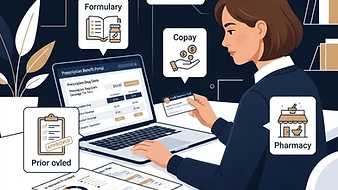
Does Insurance Cover GLP-1 Medications? What to Check With Your Health Plan
GLP-1 insurance coverage varies by medication, health plan, medical indication, and coverage rules. Learn how to check your formulary, prior authorization, deductible, copay, pharmacy network, Medicare GLP-1 Bridge, and appeal options.
How Much Does GLP-1 Medication Cost Without Insurance?
Manufacturer self-pay prices for Wegovy and Zepbound, what's not included, and questions to ask before paying. Last verified October 4, 2026.